


Hello and welcome to Many Such Cases.
Today marks the third anniversary of the launch of this newsletter. It has genuinely changed my life, and I am continuously grateful for this platform and the readers who have found me on it. It’s never lost on me how lucky I am to be here, doing this. It’s my north star.
To honor all that, I am, of course, offering a 50 percent sale on paid subscriptions. Those of you who sign up during this sale will get to hold onto this rate forever. If you are at all interested in supporting my work, in pursuing these difficult questions about sexuality and culture and gender relations, I’d love for you to become a paid subscriber. Thank you for being here, regardless.
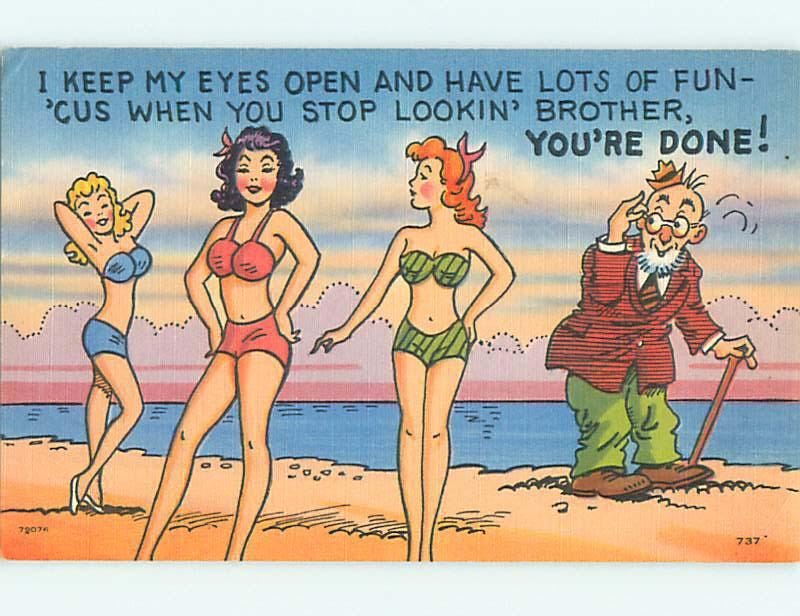
I figure now is as good a time as any to do the sort of long-winded musing that brought me here. Recently I was thinking of how common it is to discuss women who have “let themselves go” and are no longer interested in sexually appealing to men, including their spouse. There’s already a lot to problematize about this framing, namely the labor of sexual appeal and whether being sexually appealing is even an option. Always, sex appeal is presented as something we choose, and are moreover obligated to choose. And in many ways I don’t think this is an inherently false framing. As a young woman, I am conscious of my decision to be sexually appealing and to amplify that appeal through certain behaviors and aesthetic choices, like doing my makeup or wearing form fitting clothing. But there is also an extent to which being sexually appealing is not a choice: many women know they are just as likely to be catcalled in sweatpants and unwashed hair as they are when they’re dressed for a night out. All around, though, it’s women who are asked to interrogate their relationship with desirability. But neither men nor women alike are being asked to interrogate their relationship with desiring.
Desiring in the 21st century has only really been assessed through one acute window. Who we desire and who we don’t is a political matter. To not be sexually attracted to people of a marginalized identity, for example, is considered by some to contribute to their marginalization. Meanwhile, to be exclusively attracted to someone of a marginalized identity (when not of a marginalized identity, oneself) makes one a “chaser,” which is also further marginalizing. This isn’t to get into the weeds of what these desires themselves represent, but to highlight an example of one of the primary contexts through which the act of desiring is frequently discussed. Desiring is categorized and abstracted, much in the way of a porn category. The individual, be it the one desiring or the one desired, is superfluous.
One of the most famous works on the sexual politics of the 21st century deals with this dynamic. In The Right to Sex, Amia Srinivasan wrote “The question… is how to dwell in the ambivalent place where we acknowledge that no one is obligated to desire anyone else, that no one has a right to be desired, but also that who is desired and who isn’t is a political question, a question usually answered by more general patterns of domination and exclusion.”
I suppose I bring all this up in order to get it out of the way. I am not suggesting that men are under any political obligation to be attracted to women who have, willfully or otherwise, stepped outside of the norms of sex appeal through age, effort or style. But I do think that if we are to question why someone is no longer desirable, we must also question why we are no longer experiencing desire. And perhaps while there is no political obligation for desire, a more personal obligation to one another remains.
There is an extent to which I do believe married couples owe a mutual desire to one another. This requires some effort and intentionality, yes, but above all it requires understanding. We should try to be appealing to our spouses in whatever ways we are capable of, but we should also try to find our spouses appealing even as we change and grow and age. This is, by my view, part of what the commitment of marriage begs of us.
As I write all this, I can’t help but pause and think, well, who the hell am I even talking to? I am lucky to have readers of all demographics here, including those who are long married, but a good deal of you are likely so distant from even the possibility of marriage that my discussion of these later-in-life nuances may seem irrelevant. It’s not.
We are far more concerned with being desirable than desiring. Much of contemporary life is now shaped around quelling desire, or at least selling us the idea of such a possibility. GLP-1s, the miracle drug of the last decade, are in many use cases strictly about quieting desire. Our phones provide a continuous medium through which desire can be diverted and sublimated. The gender war offers an escape from desire by making it politically unpalatable.
Desire requires — and sorry to always be repeating myself here — a vulnerability with both oneself and others that many of us have discarded. Desire requires us to be willing to give, to suffer, to be willing to allow someone else be the recipient of the good feelings that we crave because this itself is supposed to feel good. Maybe the problem is that in our current culture of maximum dopamine, maximum independence, maximum cult-of-the-self it no longer really does feel good. So then if I cannot convince people that desire is a rewarding emotion in that sense, I must instead try to position desire as a human obligation. Desire is something we owe to one another, even when it is thankless. To give up on desire is to abandon the social contract.
Last night I was reading French novelist Michel Houellebecq’s 2001 book Platform which, like all his books, deals with apathy and western decline and jaded sexuality. In this particular novel, though, sex takes distinct dominance. In one paragraph, the protagonist summarizes what I’d say is fundamentally the thesis of this entire newsletter:
“Sexual liberation in the west is over… They’ve completely lost the sense of giving,” he says of westerners. “Try as they might, they no longer feel sex as something natural. Not only are they ashamed of their own bodies, which aren’t up to porn standards, but for some reason they no longer feel truly attracted to the body of the other. It is impossible to make love without a certain abandon, without accepting, at least temporarily, the state of being in a state of dependency, of weakness… we have become cold, rational, acutely conscious of our individual existence and our rights; more than anything, we want to avoid alienation and dependence; on top of that, we are obsessed with health and hygiene. These are hardly ideal conditions in which to make love.”
And this was nearly 25 years ago! That acute consciousness of our individual existence that Houellebecq describes has only magnified under the digital lens. So, too, has that sense that we are “for some reason” no longer attracted to the body of the other. The constant examination of why someone is no longer attractive gets at this precisely. It’s not us that’s the problem, it’s everyone else. As the gender war continues, this reality becomes all the more apparent. We are constantly being offered new reasons why we should not like each other that are abstract from our daily lives — because Scott Galloway is too focused on masculinity, because one woman who graduated from Wharton thinks men don’t make adequate partners in the “business” of life, whatever other news stories you might have read recently. And no doubt, men and women alike have some things we need to be working on. We do have problems, real ones, that require improvement. But this continuous criticism of each other and the perceived lack of desirability does not address what may be the fundamental issue driving it all: that we as individuals no longer wish to be entities who desire.
We must orient ourselves again as people who desire, not just people who are desirable. Desire itself is the obligation. Can we return to that? Can we reacquaint ourselves with the discomfort of abandon, with the possibility of weakness for the sake of a life of deeper meaning and social good? I’ll always think we can.
Desiring someone is dangerous, at least for humans. An AI lover, or just random porn, has fewer complications.
Said it before, I’ll say it again: new Magdalene Taylor and I’m smashing that like button.